Just a week or so ago I posted about my replanting efforts for a few of my suffering houseplants. One I was particularly upset about was my spider plant, which was looking anemic – all discolored and droopy. This one was a gift, plus spider plants are supposed to be easy-care houseplants.
Let me tell you something about “easy-care houseplants.” EASY CARE IS ONLY APPLICABLE IF YOU GIVE THE PLANT THE RIGHT LIVING CONDITIONS! Then, and only then, will that plant require minimal effort to survive and even thrive.
So, what was wrong?
So what was going on with my unhappy spider plant before I changed things up for it?
First of all, SOIL CONDITIONS. The soil, although well-put-together and well-draining, was bone dry and compacted to hell. You can see in the photo that it basically looks like the in-pot equivalent of a dust storm. The plant had been underwatered as of late and needed a soil refresh.
And, LIGHT CONDITIONS. Although I’ve been told that spider plants don’t want too much direct light, the spot I chose for this guy seemed to be underlit, hence the lack of spiderettes and sad pale coloring.
What contributed to my poor care of this plant at the time? Part of it is that raising plants is a process of trial and error (more on that later). Another large part was that this plant was in a spot out of sight of where I usually hang around in my apartment, meaning I often forgot to give it regular care. I’ve found that keeping my plants in conditions that are good for them where I can see them regularly helps me to be a better plant caregiver.
Making it Better
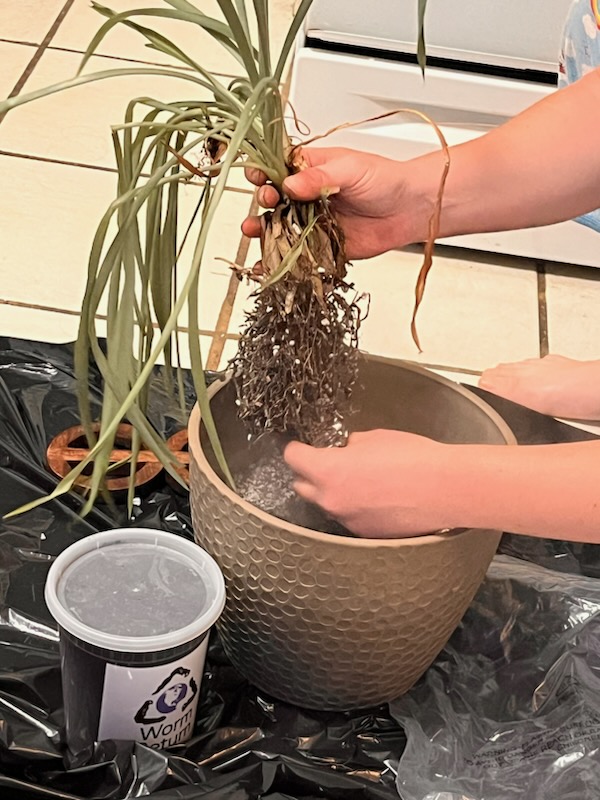
The first thing I adressed was the poor soil conditions for my spider plant. In this post you can read more about how I improved the soil using worm castings and organic pet-safe fertilizer; here, I’ll just say that I repotted the dude! While I was ammending the soil, I gave him a good soak in the sink to help with his dryness.
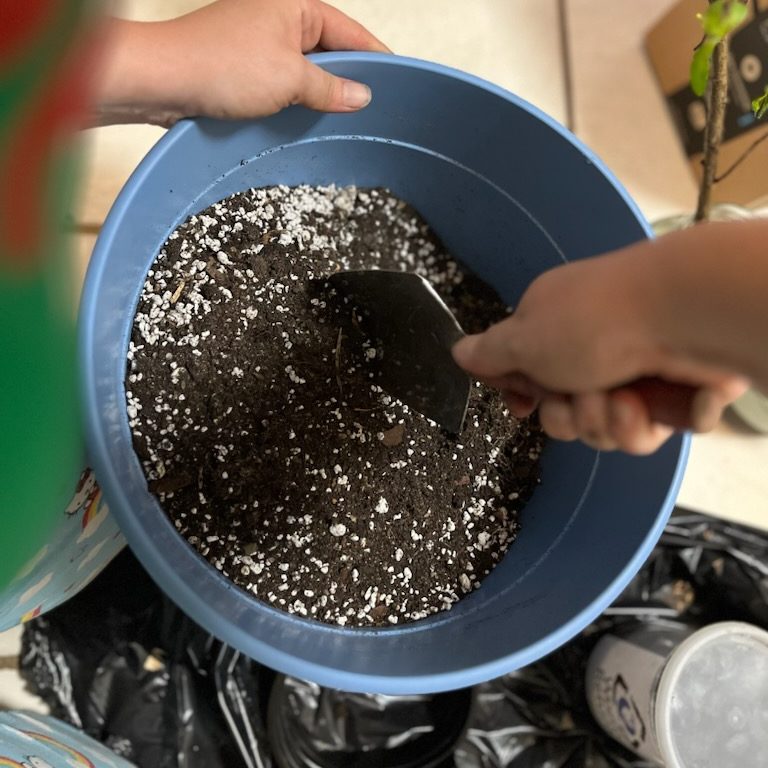
My spider’s soil now includes
- Perlite
- Rosy-brand indoor potting soil
- Humusy soil from my parents’ woods
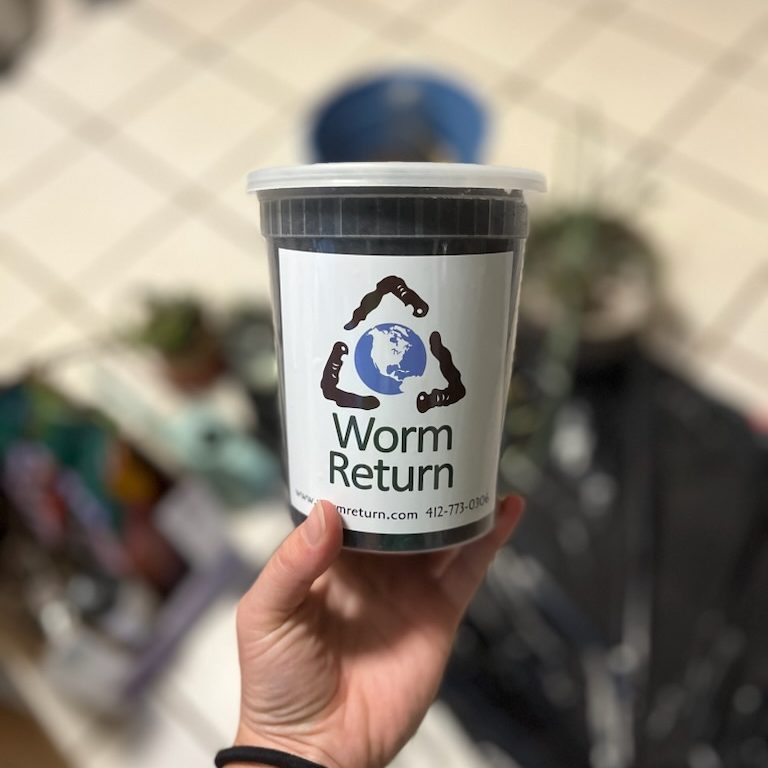
- Worm Return worm castings
- Humane organic fertilizer
with the worm castings:soil being a 1:4 ratio. I’ve heard some folks say perlite damages spider plants, so I’ve kept a close eye, but it doesn’t seem to be causing an issue. Perlite was in the original potting mix too, before I repotted, so at first I was concerned that might be part of the issue – but, as you’ll soon see, with continued perlite use the spider plant is now thriving!
Next, I addressed my poor spider plant’s thirst. While prepping the soil I let its roots soak in some water in the sink. In order to not over-soak the roots, I did not water the plant once it was placed in the soil; it had taken on enough water soaking in the sink. A day or so later, I checked the pot using the finger test and the soil was dry enough that I gave it a good watering.
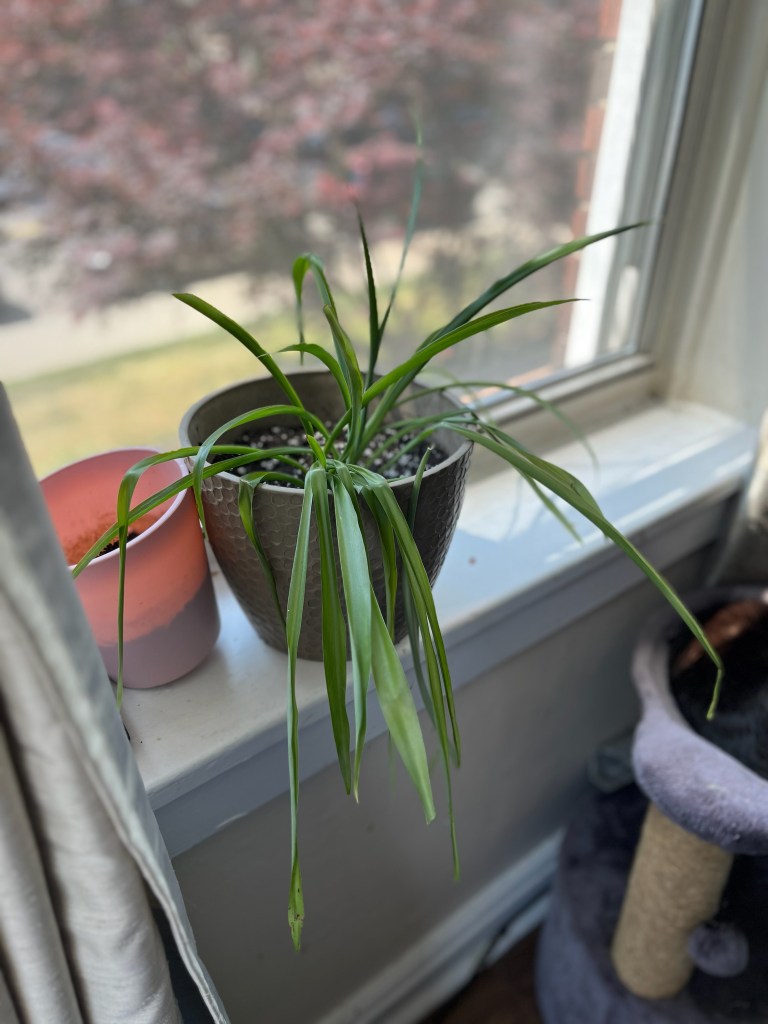


The final thing that needed to be adressed was the amount of light my spider plant was getting. More light = more spiderettes, or baby spider plants; not only was I not seeing spiderettes, but the plant looked pale, the way I look until I get to go home to the beach in the summer. It’s environment was clearly lacking something.
Now, I had heard that spider plants wanted bright but indirect light. When my spider plant first came home, it was on a table placed back from a west-facing window. That proved to be too little light as I had the curtains of that window closed a lot. So, I moved the plant onto the windowsill of that same western window. That’s where it was until I realized it still didn’t seem to be getting enough light. After fixing up the soil and soaking the roots and repotting, I actually moved the spider plant to the sill of a south-facing window to see how it would do. I figured if that was too much light, I could shift it back to the mantle or to the coffee table,m where it would get more indirect light from the south. That would still be brighter than from the west.
But, it turns out, this plant loves this new spot! I’m already seeing new growth and a greener, more luscious color. It may be that spider plants actually like more light than I thought; it may also be that this southern window has a nice balance because of a tree in front of it outside, so that the light is less direct and not as strong for a south-facing windowsill.


What Have I Learned?

Spider plants are an air-purifying, easy-care, gorgeous house plant that can offer you decades of elegant beauty and plenty of new plants born as spiderettes.
But “easy care” means setting up your spider plant to thrive. Observing it regularly to see how it’s doing and strategizing about what it needs (“It seems pale. Maybe it needs more light. Let’s try a new spot.”) will set you up for success with plant care of any kind. I’ve learned not only specifics of what spider plants need for conditions, but also general advice for caring for my houseplants and garden:
Check on your plants! Keep them somewhere you’ll remember to do so on a regular basis.
Experiment! If a plant isn’t doing well somewhere, move it.
Heed advice from experienced gardeners, but OBSERVE, OBSERVE, OBSERVE your own garden!
✿
 Urban Habitat